


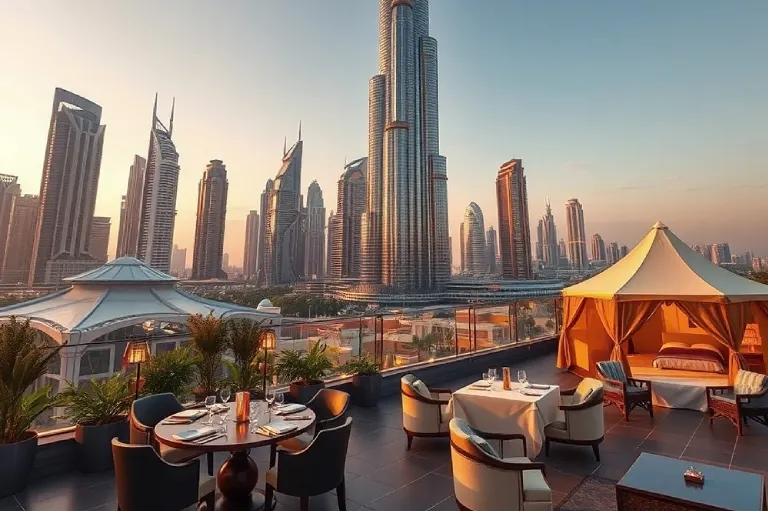
Why Dubai Is Different From What Most People Expect
Dubai gets reduced to a skyline and a mall in most travel coverage. That’s a fraction of what the city actually offers. In the last decade, Dubai has developed serious cultural infrastructure, overhauled its public transit system, built out Al Seef and the Dubai Creek area, and invested heavily in outdoor experiences that weren’t there ten years ago.
The city is also more affordable than its reputation suggests if you know where to eat, where to stay outside the Marina, and which attractions have free access.
Iconic Experiences Worth Doing Right
Burj Khalifa: Skip the Cheapest Ticket
Almost every visitor to Dubai goes to the Burj Khalifa. What most don’t know is that the Level 124 observation deck (At the Top) experience is significantly less crowded if you book the sunset + evening combo. You go up before sunset, watch the city transition, and come down after dark when the lights are out.
The Level 148 “At the Top Sky” deck goes higher and costs more, but the view differential is real. If the Burj Khalifa is a priority, don’t buy the cheapest time slot — it’s usually the busiest.
Dubai Frame: The Most Underrated View in the City
The Dubai Frame in Zabeel Park is a 150-meter gold picture frame structure with a glass-floored sky bridge connecting its two towers. One side faces old Dubai; the other faces the modern skyline. Standing in the middle of the glass floor gives you both cities at once.
It costs significantly less than the Burj Khalifa observation deck and the glass floor experience is genuinely more impressive in terms of the stomach-drop factor. Crowds are lighter too.
Dubai Creek and Al Fahidi: The Old City That Gets Ignored
Al Fahidi Historical Neighbourhood is Dubai’s oldest surviving district, with wind tower architecture, narrow lanes, and restored courtyard houses that date back over 150 years. It’s a ten-minute drive from Downtown but feels like a different city entirely.
The Dubai Museum of Illusions, the Sheikh Mohammed Centre for Cultural Understanding, and a cluster of art galleries and coffee houses sit in this area. An abra (traditional wooden water taxi) ride across the Creek costs one dirham and is still one of the best experiences in the city.
Desert Experiences: What to Do Beyond the Basic Safari
Hot Air Balloon Over the Desert
Most visitors do a standard evening desert safari with dune bashing and a barbecue dinner. That’s fine, but a sunrise hot air balloon flight over the Hajar Mountains and desert landscape near Dubai is a completely different experience quieter, slower, and visually stunning in ways that photos don’t capture.
Balloon Adventures Emirates operates the main approved service. Flights typically last about an hour. Book well in advance during peak season (October to April).
Overnight Desert Camping in the Al Qudra Area
Al Qudra Lakes, about 40 kilometers from central Dubai, is a series of man-made lakes in the desert that attract migratory birds. The area is open for camping. Waking up in the desert with flamingos and other birds around the lakes is surreal for a city that’s associated with skyscrapers.
This is a DIY experience bring your own gear, fire pit, and supplies. No booking required. Best done on weeknights to avoid crowds.
Dune Bashing vs. Sand Boarding
Dune bashing in a 4×4 is the default Dubai desert activity. It’s exciting but formulaic. Sand boarding on the Lahbab Red Dunes (about 45 minutes from the city) is less commercialized, physically active, and the red sand color makes for dramatic visuals. Several tour companies offer early morning sand boarding sessions that finish before the heat peaks.
Water and Beach Activities
Kayaking Around the Mangroves
Ras Al Khor Wildlife Sanctuary, located between the city and the coast, has mangrove channels you can kayak through. The sanctuary is also home to one of the largest flamingo populations in the region. This is completely free to enter (kayak rentals are available nearby), and it’s the kind of experience most tourists don’t realize exists inside the city limits.
The Palm Jumeirah: What’s Worth It and What’s Not
The Palm Jumeirah monorail gives a decent view of the structure from a distance for under 50 AED. The Palm’s beach clubs are expensive but some have a pay-per-access model rather than requiring a full-day minimum spend. Atlantis Aquaventure Waterpark is genuinely good for families. The View at The Palm (observation deck on the 52nd floor of The Palm Tower) is excellent and less crowded than the Burj Khalifa.
Food Experiences: Where to Eat Beyond Hotel Buffets
Deira Spice Souk and Gold Souk Area
The Deira neighborhood on the north side of the Creek is where Dubai’s working population eats. The streets around the Deira Spice Souk and Gold Souk are packed with South Asian, Middle Eastern, and East African restaurants that serve excellent food at a fraction of Marina prices.
Al Ustad Special Kabab is a Dubai institution it’s been running since 1978 and the seekh kababs remain among the best in the city. Ravi Restaurant in Satwa serves Pakistani food that has consistent queues regardless of the time of day.
Dubai’s Restaurant Scene: What’s Actually Worth the Price
Dubai has some of the world’s best restaurants, but not all expensive restaurants are good ones. The ones that consistently deliver on quality include: Trèsind Studio for Indian tasting menus, Ossiano at Atlantis for underwater dining, Kinoya for modern Japanese, and Folly by Nick & Scott for European plates with a great terrace.
For a budget meal that’s genuinely excellent, the food halls at Boxpark and La Mer have a mix of local and international options without the markup of sit-down venues.
Cultural and Museum Experiences
Louvre Abu Dhabi — Is the Day Trip Worth It?
Abu Dhabi is 90 minutes from Dubai by road. The Louvre Abu Dhabi is a genuinely world-class museum in a breathtaking building a dome that filters light into “rain of light” effects on the water below. The permanent collection spans 10,000 years of human civilization across all continents.
If you have a free day in Dubai and any interest in art or history, this trip is worth it. Dubai-Abu Dhabi transfers run frequently and cheaply from the Abu Dhabi bus terminus.
Etihad Museum, Dubai
The Etihad Museum near Jumeirah Beach tells the story of the formation of the UAE in 1971 through well-designed interactive exhibits. The building itself is stunning designed to resemble a rolled-up parchment. Entry is affordable. It rarely gets the attention it deserves from international visitors.
Practical Tips for Getting More Out of Dubai
- Use the Dubai Metro instead of taxis for any journey along the red or green line. It’s clean, fast, air-conditioned, and costs a fraction of cabs.
- Avoid June to September if heat tolerance isn’t your strong suit. October to April is the sweet spot.
- The Dubai Pass (Nol card) works on metro, buses, water buses, and trams. Get one on day one.
- Friday brunch is a Dubai institution. Most upscale hotels offer all-inclusive brunch from midday to 4pm. Book at least a week ahead for popular venues.
- Dress codes: malls, restaurants, and hotels are relaxed. Religious sites and souks expect shoulders and knees covered.
- The currency is the UAE Dirham (AED). It’s pegged to the US dollar at roughly 3.67 AED to $1.
Things That Are Actually Free in Dubai
- JBR Beach and Kite Beach — free public beaches with changing facilities.
- Dubai Fountain show near Burj Khalifa — runs nightly, visible from outside without buying a ticket.
- Dubai Miracle Garden (viewing from outside the park during the season).
- Al Fahidi neighbourhood walking tour — self-guided, no entry fee.
- Ras Al Khor Wildlife Sanctuary flamingo hides — free entry, three bird-watching hides overlooking the wetlands.
Conclusion
Dubai rewards the traveler who looks past the Instagram highlights. The skyline is real and impressive — but so is the old creek district, the desert landscape, the underrated museums, and the food in neighborhoods that don’t appear in most travel guides. Plan a week minimum to get past the surface. Even then, you’ll be adding to a list for next time.
Frequently Asked Questions
Q: How many days do you need in Dubai? A minimum of four days to cover the major highlights. Seven days allows you to explore neighborhoods, do a desert overnight, and take a day trip to Abu Dhabi.
Q: Is Dubai safe for solo female travelers? Yes. Dubai has very low violent crime rates. Female travelers report feeling safe in public spaces. Modest dress in souks and religious sites is advised.
Q: What’s the best area to stay in Dubai? For first-time visitors, Downtown Dubai is central to the major attractions. Dubai Marina is better for beach proximity and nightlife. Deira is cheapest and best for authentic food and market experiences.
Q: Is alcohol available in Dubai? Yes, in licensed hotels, bars, and restaurants. It’s not sold in supermarkets. Consumption in public or in non-licensed venues is illegal.
Q: What is the Dubai visa situation for tourists? Most nationalities receive a visa on arrival or visa-free access for 30 to 90 days. Check the UAE government portal for your specific passport. e-Visa options are also available.
