


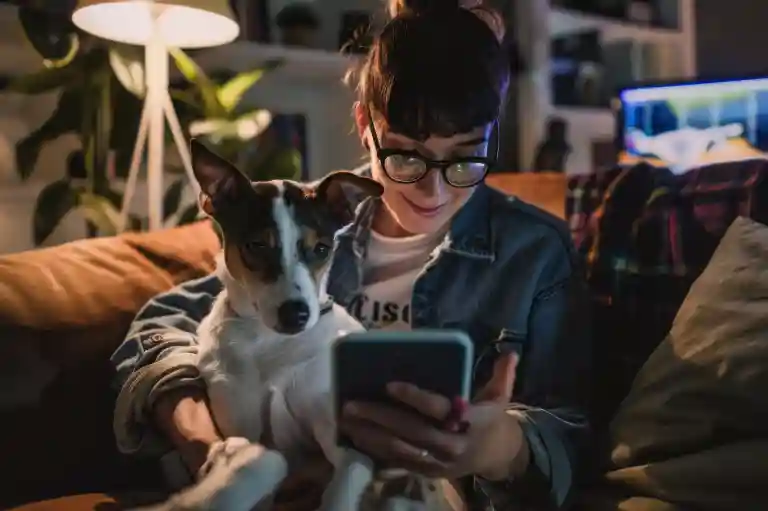
Every week, some new video of a dog reacting to a magic trick, a cat systematically pushing objects off a shelf, or a parrot having an opinion about something that racks up millions of views. It happens so regularly that it feels predictable but the mechanics behind it are well-studied.
What makes pet content go viral isn’t random. There are identifiable patterns in the content itself, the psychology of the viewer, and the dynamics of how social platforms distribute content.
What Does the Psychology Behind Viral Pet Content Look Like?
The appeal of animal content online is rooted in several well-documented psychological mechanisms.
The Cute Response (Kindchenschema)
In 1943, ethologist Konrad Lorenz described what he called Kindchenschema or the ‘baby schema’ a set of physical features that trigger caregiving and affectionate responses in humans. These include large eyes relative to the face, round heads, soft features, and clumsy movement.
Many domestic animals particularly dogs, cats, and baby animals of almost any species share these features. When people see them, there’s a measurable neurological response. Studies using fMRI show activation in the orbitofrontal cortex a region associated with reward when people view images with baby schema features. This isn’t subjective preference; it’s a hard-wired response.
Oxytocin and Parasocial Bonding
Viewing pet content online triggers mild oxytocin release, even when the viewer has no relationship with the specific animal. This is the same bonding hormone involved in real-world human-pet interaction. It’s part of why people feel genuine emotional investment in animals they’ve never met the parasocial relationship formed with online pet personalities is biochemically real, even if it’s asymmetric.
Surprise and Pattern Interruption
Neurologically, surprise activates the same reward circuits as positive events. When a small dog confidently barks at a much larger dog, when a cat opens a door, or when a parrot accurately mimics a phone call these are pattern interruptions. The brain registers them as unexpected, triggering engagement and the impulse to share.
What Specific Content Patterns Go Viral Most Often?
Analysis of viral pet content across platforms shows a few consistent patterns:
- Human-like behavior: Pets doing things that map onto human actions ordering food, seeming to understand conversations, expressing apparent opinions are consistently high-engagement. The anthropomorphism reflex is strong.
- Unexpected competence: A dog navigating a complex task, a cat solving a puzzle, or a bird that clearly understands language cues triggers genuine surprise and is highly shareable.
- Interspecies friendships: Content showing unlikely animal pairs a dog and a deer, a cat and a crow, a rabbit and a guinea pig generate strong emotional responses and shares.
- Reactions to novel stimuli: Pets encountering things for the first time (a mirror, a new food, a baby, their first snow) reliably generate engagement because the reactions are unscripted and unpredictable.
- Animals with distinct personalities: Pets that consistently express what appears to be a strong personality grumpy, dramatic, stoic, judgmental develop followings because they’re predictably entertaining in an unpredictable way.
Which Pets and Breeds Have Become Cultural Phenomena?
Several individual animals have transcended viral content to become genuine internet institutions. Understanding what made them stick reveals patterns beyond just cute or funny.
Grumpy Cat (Tardar Sauce)
Grumpy Cat whose real name was Tardar Sauce became one of the most recognized cat faces in internet history after her photo was posted on Reddit in 2012. Her appeal was specific: the feline version of resting disapproval face, combined with the human tendency to project emotions onto animal expressions. Her owners estimated she generated over $100 million in licensing revenue during her lifetime. She died in 2019 but remains a reference point for internet pet culture.
Jiff Pom
Jiff Pom, a Pomeranian with a following of millions across platforms, became famous partly for holding Guinness World Records for dog running speed, partly for exceptional photography, and partly for consistent aesthetic branding. The account demonstrates that high-production-value pet content can sustain long-term engagement beyond single viral moments.
Lil Bub
Lil Bub was a cat with multiple genetic mutations that resulted in dwarfism, extra toes, and a permanent exposed tongue. She became an internet icon and her owner used the platform to raise millions for special-needs pet adoption. She demonstrates that animals with distinctive physical appearances combined with consistent content and a positive narrative arc build durable followings.
How Do Social Media Algorithms Affect Pet Content Distribution?
Platforms don’t distribute all content equally. Understanding how algorithms interact with pet content explains why some videos explode and others don’t.
TikTok’s For You Page algorithm is particularly favorable to pet content. Its recommendation engine weights content that generates high completion rate (people watching to the end), strong engagement (likes, comments, shares), and immediate re-watch behavior. Funny, surprising, or emotionally resonant pet videos often hit all three metrics simultaneously.
Instagram rewards content with high early engagement meaning the first few hours after posting matter enormously. Accounts with established audiences and consistent posting schedules have algorithmic advantages. Reels outperform static posts for reach on Instagram, which is why short-form video has become the dominant format for pet accounts with large followings.
YouTube favors longer content and watch time. Compilations, day-in-the-life formats, and training or care content tend to accumulate views steadily over time rather than exploding immediately.
The Role of Sound
Sound is increasingly important in viral pet content. A cat meowing in what sounds like a word, a dog that appears to ‘say’ something recognizable, or carefully matched audio that makes an animal appear to be reacting to music these formats are specifically well-suited to platforms with sound-on default settings.
What Makes Some Pet Accounts Build Long-Term Followings?
There’s a difference between one viral moment and a sustained presence. The accounts that build large, engaged long-term followings tend to share several characteristics:
- Consistent character framing: The animal has a defined ‘personality’ that content consistently reinforces whether that’s lazy, dramatic, curious, or stoic
- Regular posting cadence: Algorithms reward consistency, and audiences develop habitual engagement with accounts that post predictably
- Owner voice and relationship: The human-pet dynamic is part of the content followers follow both the animal and the owner’s relationship with it
- Cross-platform presence: Accounts that distribute across TikTok, Instagram, and YouTube multiply reach and reduce dependence on any single platform’s algorithm
- Community engagement: Responding to comments, acknowledging milestones, and making followers feel part of the animal’s story builds retention
Is Viral Pet Fame Good for the Animals Involved?
This is a question that’s received increasing attention as pet social media has grown. The concern is that owners optimize for content performance in ways that may not align with the animal’s wellbeing training behaviors that cause stress, maintaining filming sessions that exceed an animal’s comfort, or selecting for animals with unusual physical traits (extreme brachycephalic features, for example) because they’re more photographable.
Organizations including the ASPCA and veterinary behaviorists have noted that some viral content shows animals in situations that are actually stressful or confusing reactions that read as funny to humans but reflect genuine anxiety in the animal. The ‘surprised’ or ‘scared’ cat is sometimes genuinely distressed.
Responsible pet content creation involves understanding the animal’s body language, ensuring filming doesn’t involve fear or coercion, and not pursuing content that requires repeated distressing the animal for reactions.
Conclusion: Viral Pet Content Is More Predictable Than It Looks
There’s a real formula behind what makes pets go viral cute triggers, surprise mechanics, platform distribution dynamics, and character consistency. Understanding those mechanics explains why certain content explodes while equally ‘cute’ content doesn’t.
What the best pet content creators understand is that the animal’s authentic behavior is unscripted, unstageable, and specific to that individual animal is what viewers actually connect with. Trying to manufacture that usually falls flat. Capturing it consistently is the actual skill.
Frequently Asked Questions
Q1: Why do people find pet videos so satisfying to watch?
Pet videos trigger measurable neurological responses including oxytocin release, activation of reward centers through cute visual features (Kindchenschema), and engagement through surprise or pattern interruption. These responses are largely involuntary and explain the broad, cross-demographic appeal of animal content.
Q2: What type of pet content gets the most views?
Content showing unexpected behavior, human-like actions, interspecies interactions, and animals with strong apparent personalities consistently generates high views. Short-form video (TikTok, Instagram Reels) currently dominates in terms of rapid reach, while YouTube compilations accumulate views over longer timeframes.
Q3: What was the most famous viral pet of all time?
Grumpy Cat (Tardar Sauce) is often cited as the most culturally impactful internet pet, having generated an estimated $100M+ in licensing during her lifetime. Other significant figures include Lil Bub, Jiff Pom, and Boo the Pomeranian.
Q4: How do pet accounts get verified on Instagram or TikTok?
Verification on major platforms requires meeting notability criteria typically involving a large established following, press coverage, and authenticity confirmation. Pet accounts with substantial followings can apply through the platform’s standard verification process. The threshold varies by platform and changes over time.
Q5: Is it ethical to post your pet online?
Posting pet content is generally fine if the content reflects the animal’s natural, unstressed behavior. Concerns arise when content is obtained through methods that cause fear, pain, or repeated distress, or when physical traits are selected for visual appeal at the cost of animal health (such as breeding for extreme brachycephalic features). Understanding animal body language helps owners recognize when filming should stop.
Q6: Which pets go viral most often?
Cats and dogs dominate viral pet content due to the scale of their ownership and the depth of their behavioral repertoire. Parrots, raccoons, otters, foxes, and baby animals of unusual species also generate strong engagement. Animals with distinctive, unusual appearances or behaviors that map onto human emotional expressions tend to perform particularly well.
